
The Definitive Guide to the 11 Genres of the Bible
The Bible is both a work of history and a work of literature. As a work of history, the Bible tells the story of God’s kingdom from creation to new creation. And as a work of literature, it tells this story in a highly artistic way, incorporating various literary genres.
Understanding Genre
To understand genre, we should keep in mind three principles—
1. Genres are loose categories.
Readers cannot always clearly identify the boundary between one genre and another. Where does prophecy end and apocalyptic vision begin? The answer is subjective, and readers may disagree on which category certain texts belong to.
2. Texts may participate in multiple genres simultaneously.
Authors may embed a song within historical narrative. A proverb may be utilized in a letter. Genres do not impose their rules on authors, rather authors utilize various genres as tools to accomplish their purposes.
3. Genres primarily exist for social functions.
One of the most helpful questions we can ask is why does the author communicate this information in this genre rather than in another genre? The medium contributes to the message. Song communicates on an emotional level that speech cannot. Proverbs condense wisdom into memorable bits. We examine the genre of a text not only to understand what the text is saying, but to know what the text is doing.
The Most Significant Genres Across Scripture
While there are many sub-genres in the Bible, these are the most significant genres across Scripture—
1. Apocalyptic Vision
This unique prophetic genre typically consists of a vision in which the prophet is guided by a heavenly figure, and truth is communicated to the prophet through a constellation of symbols. Examples of such apocalyptic visions can be found in Daniel, Ezekiel, and Revelation. Apocalyptic vision functioned to remind God’s suffering people that God was in fact governing all human history for their good. The almost cinematic nature of apocalyptic vision transfuses the genre with emotional intensity intended to stabilize suffering believers.
2. Covenant Law
The law given to Israel through Moses at Sinai can be found in Exodus through Deuteronomy, but it is alluded to throughout the Scriptures. While the regulations found in these books are similar in some ways to other ancient law codes such as Hammurabi’s, they are uniquely given to Israel as covenant stipulations that dictate their relationship with God and result in either blessing or cursing. As such, covenant law is embedded within the narrative of Israel’s salvation from Egypt. Taking on the form of ancient suzerain-vassal treaties, covenant law bonds Israel in treaty with their Savior God and instructs Israel how to live in a way consistent with their relationship with God.
3. Dialogue
This genre records teaching through the means of a conversation between two or more people. In the ancient world, Plato utilized dialogue in works like The Republic, where he presented his views about a well-ordered city through a conversation between Socrates and other Athenian men. In the Bible, dialogue is used in the Gospels to record Jesus’ teaching through conversations he had with his disciples, seekers, and opponents. While the gospels are primarily books of historical narrative, dialogues, such as Jesus’ conversation with Nicodemus in John 3, slow down the narrative and allow us to learn from Jesus alongside his conversation partners.
4. Historical Narrative
Most of the Bible is historical narrative, especially Genesis to Esther in the Old Testament and Matthew to Acts in the New Testament. This genre seeks to record past events in order to relate how God has revealed himself within the history of his people through his actions, promises, and providence. Historical narrative primarily utilizes the mode of prose, but often includes songs, prophecies, speeches, and letters to highlight important elements in the story. The narratives of the Bible are not heroic myths like we encounter in other ancient cultures; rather, they are realistic stories and tied explicitly to broader historical events. At the same time, they differ from modern humanistic history because the focus of the narrative is always God’s self-revelation to his people rather than the people or events alone.
5. Letter
Biblical letters typically set forth an author’s argument in a way that seeks to influence the recipients’ faith and behavior. While the most obvious examples of letters are found in Romans through Jude, letters can also be found in Old Testament narratives like Nehemiah and prophets like Jeremiah. Even Revelation, although recording an apocalyptic vision, takes the form of a letter. Many contemporary students of the Bible find letters the easiest genre to interpret because the meaning of the book is given directly through tracing the author’s argument. Nevertheless, readers can grow in their interpretative skills by learning about the form and production of ancient letters.
6. Parable
We rightly associate parables with the teaching ministry of Jesus, and Matthew identifies this aspect of Jesus’ teaching as a fulfillment of Old Testament prophecy: “I will open my mouth in parables” (Matthew 13:35; quoting Psalm 78:2). Parables are short stories or illustrations drawn from everyday life that communicate truth. While some parables contain allegorical elements (e.g., Matthew 13:1–23), most focus on a single point that is often highlighted by a surprising turn in what would otherwise be a common narrative (e.g., the father of the prodigal running toward his wayward son, Luke 15:11–32).
7. Prophecy
Prophecy is a direct communication from God through the mouth of the prophet and is often introduced by a phrase such as “This is what the Lord, the Lord Almighty, says . . .” (Isaiah 22:15). The prophets in the Bible usually delivered God’s oracles in the form of poetry, which is more easily memorized and recited, but prose prophecies are also common. Most of Isaiah to Malachi consists of these direct prophetic words from God, but the genre can also be found embedded in historical narrative as well. One of the primary themes of 1–2 Samuel and 1–2 Kings, for example, is the prophetic word given repeatedly to Israel. Even the prophetic books of Isaiah to Malachi do not stand independently. They can only be rightly understood when read within the context of the historical circumstances in which the prophecies were given.
8. Proverb
The proverb is a succinct and memorable saying that communicates a wise principle that is generally true in God’s creation. The primary examples in the Bible can be found in the collections of the book of Proverbs, but they can also be found in the teachings of Jesus and even the letter of James. The genre’s common-sense nature affirms God’s general revelation to all humanity in creation, while also teaching us that we can only truly become wise if we learn to fear the God of creation (Proverbs 1:7).
9. Speech
Various speeches can be found recorded throughout Scripture, but they are primarily embedded in historical narrative. The teachings of Jesus and the sermons in Acts both take this form, but examples can be found in Old Testament books like 1 Kings and Ezra, especially when extended public prayers are recorded. Both Deuteronomy and Ecclesiastes record speeches given to the people of God at the end of the authors’ lives. Without modern recording equipment or stenography, ancient authors considered a speech accurately conveyed if they recorded the substance of the speech, often in summary form, even if they didn’t record the speech verbatim. By framing such speeches, sermons, and prayers within historical narrative, the biblical authors often utilize speech to slow the narrative and emphasize important themes in the story they are telling.
10. Song
This poetic genre records words the author intended to be set to music. While most of the songs in the Bible can be found in the Psalms, other songs can be found throughout the Bible in both narrative and prophetic sections. Not all ancient songs would have been sung to unique melodies, like modern songs. More than sung, many were likely recited to the rhythm and repetitious melodies of instruments like the lyre, from which we get the term lyric poetry. Nevertheless, the genre overflows with emotional depth and can capture everything from intense celebration to mournful lament. While Psalms presents songs with minimal historical context as a perpetual songbook for the people of God, the songs that authors embed in narratives highlight and give emotional depth to God’s mighty acts on behalf of his people.
11. Wisdom Poetry
The book of Job is unique among the books of the Bible and should be categorized as wisdom poetry. Wisdom poetry is unique from songs in that it was not necessarily written to be set to music. It is also unique from proverbs because it gives wisdom in an extended form that tells a story. While telling the story of a historical figure, the book of Job only briefly utilizes the genre of historical narrative. The poetry of Job allows the author to write with an emotional intensity that matches the narrative while also writing in a form that is easily memorized. Since about half the book contains the flawed “wisdom” of Job’s friends, readers cannot treat passages in isolation but need to be aware of the entire flow of the book.
The Importance of Genre
In the same way that God revealed himself within human history and through human cultures and languages, the biblical authors, being led by the Holy Spirit, submitted themselves to the forms, rules, and expectations of ancient genres to communicate clearly and beautifully to God’s people. When we learn to read the Bible with an ear for genre, we position ourselves to understand God’s word at a deeper level. Genre awareness helps us tap into the Spirit-inspired wisdom of the biblical authors to instruct, warn, comfort, provoke repentance, or stir worship. Recognizing genre enriches helps draw us more fully into the grand story God is telling and shaping us to respond to with trust, obedience, and joy.
Drawn from the Introduction to the NIV Timeline Bible.
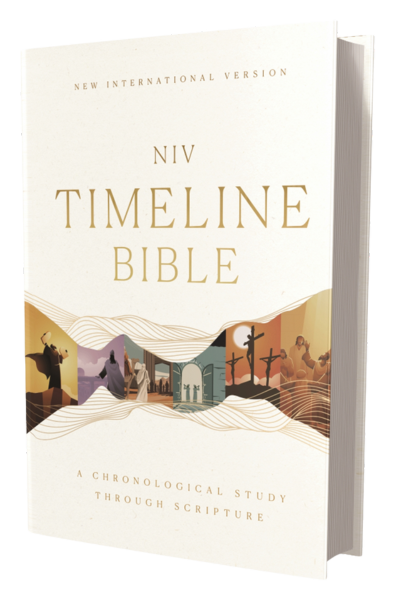
NIV Timeline Bible
The NIV Timeline Bible offers a unique presentation of the Bible for reading and study. The Scripture text is presented in an essentially chronological order, with the books of poetry and prophecy and the New Testament letters integrated into the history in which they were written. Duplicate passages are presented in parallel, side-by-side format so the texts can be studied together. And the Bible’s literary genres are indicated for deeper understanding of what the text is saying and doing. See sampler.
Learn More