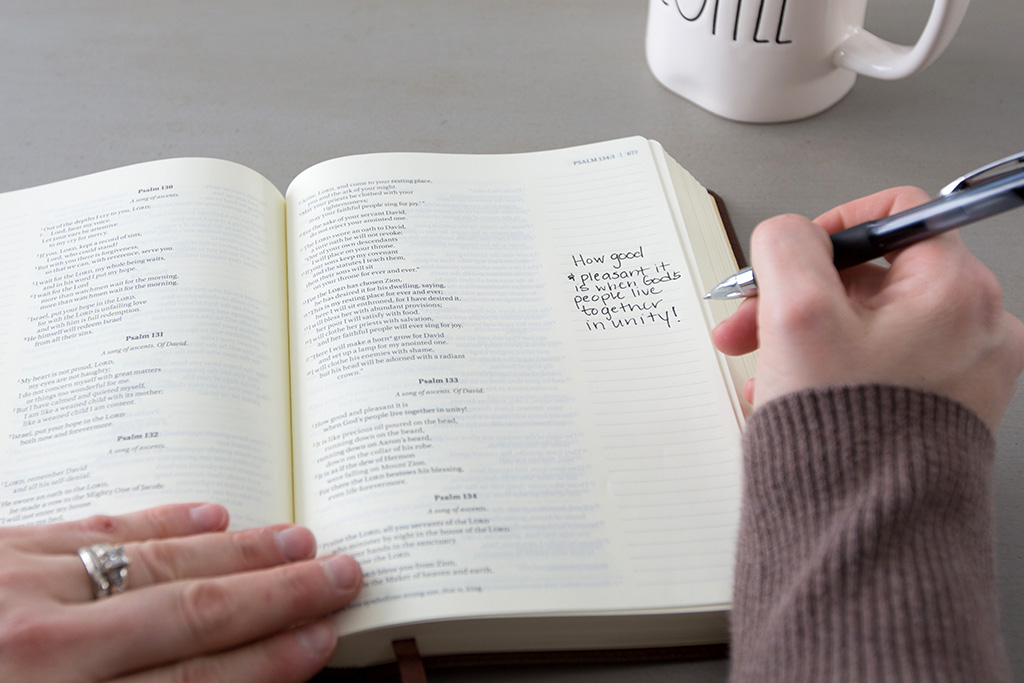

Pen in Hand: How Writing Deepens Bible Study
“What did I just read?”
I stared blankly at the book in front of me. I had actively been flipping the pages of my book but couldn’t recall a single thing I had read from the past few pages. Granted, it was my bedtime and I was tired. Still, I had been awake enough to actively move my eyes from left to right, line by line, down the page as if I was truly reading and retaining the information.
But I wasn’t.
I was frustrated with myself for zoning out and wasting my precious few minutes of me-time before bed. I don’t get much time to simply sit and read for the fun of it, and when I do, I want that time to count.
I am a bit of a theology junkie. Fiction rarely holds my attention, but give me a book steeped in biblical or theological topics and I’m usually locked in.
Usually.
Moments like that one reminded me that reading alone doesn’t always mean we are truly absorbing what we are reading.
Over time, I began to notice something about my own habits. When I slowed down with a pen and highlighter in hand, my focus sharpened. Underlining key phrases, jotting thoughts in the margins and marking passages forced me to pause and engage with the text in a way that simply reading never did.
Instead of letting my eyes glide across the page, I had to actually think about what I was reading and engage my brain to process what I had just read.
And interestingly enough, there’s science behind why that happens.
Our brains are wired so uniquely that something in the physical act of writing helps reinforce memory and comprehension. When we underline, highlight or write in the margins, we are doing more than decorating a page for the sake of beauty…we are actively processing and storing information more deeply.
Sometimes folks want to get uncomfortable when you mention science and Scripture in the same sentence. But personally, I think they work beautifully together.
After all, God is the author of both.
It shouldn’t surprise us that the One who designed our minds also understands how we learn best. The way our brains respond to writing, repetition and reflection seems to align so perfectly with what we see in Scripture. God repeatedly instructs his people to write down his Word.
On Mount Sinai, Moses was instructed to record God’s covenant words (see Exodus 34:27). Later, the people of Israel were told to write all the words of the law on stones when they entered the Promised Land (see Deuteronomy 27:8).
The prophet Jeremiah was told by the Lord to write in a book the words that were spoken to him (see Jeremiah 30:2). Habakkuk was given a direct command to write a prophetic vision on tablets (see Habakkuk 2:2). Ezekiel was told to write down the exact date of Jerusalem’s siege (see Ezekiel 43:11). And in Revelation, John was told to write what he saw in his vision and send it to the churches (see Revelation 1:11).
Once you start noticing it, the pattern of writing things down becomes hard to ignore.
God repeatedly asks his people to record what he says and what he does.
Which makes you wonder…why?
Why would the Lord place so much emphasis on writing things down?
Perhaps part of the reason writing matters so much is that it helps us slow down and reflect. When we write, we are actively processing what we are reading or hearing. It forces us to focus on the information in front of us rather than simply letting our eyes glide across the page.
The fact that God’s command to write things down is everywhere in Scripture means there must be something to it. Recording what God says and what he does seems to matter deeply to the Lord.
Scripture shows this time and time again.
Personally, I have experienced the benefit of writing as I study through God’s Word. When I pause to make notes in the margins, underline repeated phrases or jot down something the Lord is teaching me, my attention sharpens. I begin to notice things that I might have otherwise missed.
Over the years, writing as I study has become a normal rhythm of my Bible study. I rarely open my Bible without a pen and highlighter in hand. After using a journaling style Bible for the past ten years, I’ve realized I will always gravitate towards one. I need the space to write in the margins, jot cross-references and record important details. At this point, it’s just how I engage with God’s Word.
Because of that, it felt especially meaningful when the Lord opened a door I never expected. In his perfect timing, I was given the opportunity to create two cover designs for Zondervan as part of their NIV Artisan Collection Journaling Bibles.
As someone who has spent years filling the margins of a journaling Bible with notes, it feels like a full-circle moment. Truly a Bible after my own heart.
But beyond the design on the cover, what matters most is what happens on the inside of those pages.
Scripture was never meant to be approached like a checklist. God’s Word invites us to linger. To dig deeper. To trace the thread from Genesis to Revelation and see the beautiful story of how he has redeemed his people.
Over time, writing in my Bible has become a record of learning, wrestling with the text and having several “ah-ha” moments when something in Scripture suddenly becomes clearer. I don’t think I would have been able to have the same experience with the text if it weren’t for writing in my Bible.
So, I invite you to slow down with a pen in hand. Write what you see. Ask questions. Take notes. Let the margins become your safe place of processing and learning.
Instead of treating your Bible study as something to check off your list, allow it to become a time you look forward to each day. Spend time lingering in the Word and discover for yourself the depth of what God has spoken.
Written by Kerri King.
See these other articles on Bible journaling: Three Bible Journaling Ideas for Your Spiritual Walk, Charting Your Spiritual Growth through Bible Journaling, How to Bible Journal, and How to Choose the Best Bible Journaling Tools.
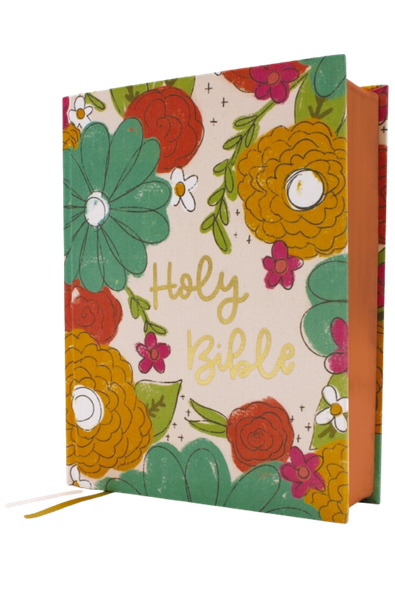
NIV Artisan Collection Bible
Exquisite from the inside out, the NIV Artisan Collection Bible will delight you with its unique cover design, created by Kerri King at Kingfolk Co. Each page of this Bible has lightly ruled, wide margins, inviting you to journal, reflect, take notes, and create your own art.
Learn More