Rahab: A Hero of Faith and Redemption
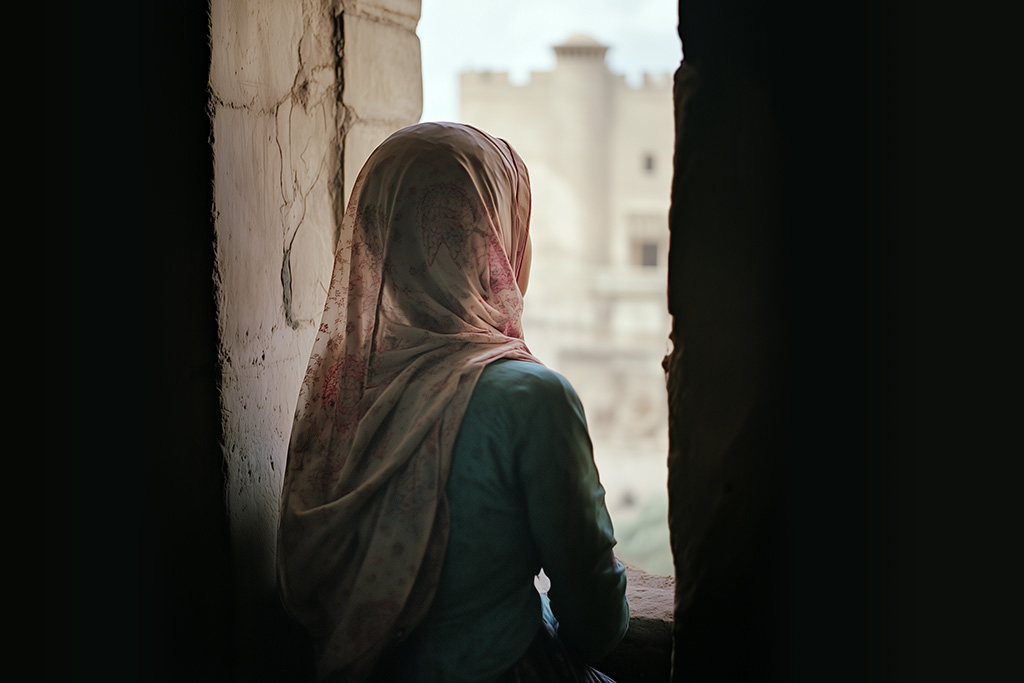
Rahab the prostitute—what an unlikely hero of faith! Rahab’s story is an inspiring example that demonstrates how our human résumé is much less important than the condition of our heart before God. When God sent Samuel to anoint King David, God told Samuel that humans look at the outside, but God looks at the heart (see 1 Samuel 16:7). On the outside, Rahab’s life was messy, but she showed herself to be a person of amazing faith.
Rahab Chooses God Over the King
Rahab is first mentioned in Joshua 2. The Israelites are camped on the east side of the Jordan River, poised to enter the Promised Land. Their leader, Joshua, sends two spies to look over the land. Arriving in Jericho, the spies enter the house of Rahab the prostitute. When the king of Jericho learns that there are Israelite spies in his city, he sends messengers to Rahab’s house, telling her to hand the men over. Instead of obeying the king, Rahab lies to protect the spies. Why did Rahab defy the king’s orders?
Before we answer that question, let’s notice a parallel between Rahab and the Hebrew midwives, Shiphrah and Puah, in Exodus 1. Pharaoh had ordered the midwives to kill Hebrew baby boys (see Exodus 1:16). Like Rahab, Shiphrah and Puah deceived Pharaoh to protect life. While deception on its own is, of course, not good, these stories both show us that protecting life is of higher importance. Love of God and love of neighbor are, after all, the greatest commandments (see Matthew 22:37–40).
Shiphrah and Puah disobeyed Pharaoh because they feared God (Exodus 1:17). Rahab defied the king’s orders for the exact same reason: She feared God rather than the king of Jericho. Speaking to the spies, Rahab offers a powerful profession of faith: “. . .the LORD your God is God in heaven above and on the earth below” (Joshua 2:11). Rahab invokes the name of the God of Israel, Yahweh, and declares Israel’s God to be sovereign over all.
Rahab and the Scarlet Cord: A Passover Parallel
Reading further in Joshua, we learn that Rahab had a request for the spies. She asked them to spare herself and her family when the Israelites conquered Jericho. They promised to honor her request on certain conditions: She was to leave a scarlet cord in the window through which she helped the spies escape, and make sure all her family members were in her house with her. The spies said that any people who were out in the streets would perish (see Joshua 2:17–19).
These might seem like puzzling conditions until we read them alongside God’s Passover directions to the Israelites in Exodus 12. Those instructions included putting the blood of a lamb on the doorframes of the Israelites’ homes, and no one leaving their homes (see Exodus 12:22). This comparison makes the Rahab story even more striking. Rahab, a Canaanite prostitute, becomes, in a sense, an honorary recipient of the Passover promise. The scarlet cord in the window parallels the red blood on the doorframes, and the command for her family to be in the house with her echoes God’s directions to the Israelites back in Egypt. Amazing!
What Rahab Reveals About God’s Heart
Rahab’s story challenges us to confess our reluctance to welcome outsiders and “messy” people. Too often, we are quick to judge and reject. When we do so, we risk missing the amazing testimony of God’s work in others’ lives. Just as Jesus was compassionate towards people with messy lives and those on the margins of society, we should follow Jesus’ lead today by showing hospitality and love to those that society often ostracizes. We may find ourselves amazed at the lives God is working in. Christians are called to be people who are willing, and eager, to welcome others.
Rahab doesn’t silently disappear from the pages of Scripture after the Jericho story. In the New Testament, the author of Hebrews names Rahab as a hero of faith: “By faith the prostitute Rahab, because she welcomed the spies, was not killed with those who were disobedient” (Hebrews 11:31). Furthermore, Matthew 1:5 names Rahab in the genealogy of Jesus Christ!
Rahab reminds us that our faith is more important than our past, or the mistakes we have made, and faith is more important than bloodline. What an encouraging reality of God’s kingdom!
For several years, I taught a Bible class on the Old Testament for high school juniors. The theme of my class was “Might from the Margins,” a phrase I took from a book with the same title by Dennis Edwards. Of all the wonderful examples of this inspiring theme, Rahab was always my favorite to teach, and—judging by the reflection and artistic assignments I invited my students to complete on a character of their choosing—Rahab was among the students’ favorites as well. Rahab shows us a core gospel truth: God invites us to put our faith in him, leave our past behind, and join his amazing story of redemption.
Adapted from the study material from the NIV Application Bible based on the NIV Application Commentary series.
NIV Application Bible
Featuring thousands of study notes drawn from the bestselling NIV Application Commentary series, the NIV Application Bible guides you in discovering how the ancient truths found in Scripture relate to your experiences today using insight from trusted evangelical scholars, paired with timely biblical application principles.
Learn More